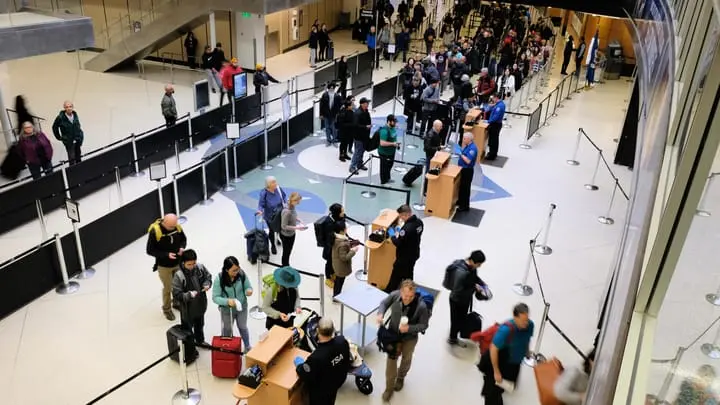
These weaknesses could have allowed malicious actors to interfere with traveler admittance into countries including Nigeria, Ethiopia, Zambia, Sri Lanka, Fiji, and Ghana.
Independent security researcher Eaton Zveare uncovered these flaws within the digital passport and border-control mechanisms of several nations: Nigeria, Ethiopia, Fiji, Zambia, Sri Lanka, and Ghana. Although each system possesses unique defects, the general characteristic of these vulnerabilities was the allowance of unauthorized access to the private data of millions of travelers, which could encompass biometric identifiers such as fingerprints. Furthermore, in certain instances, the flaws provided access to administrative functions, enabling the approval or rejection of entry into a nation.
Specifically, Zveare identified critical API weaknesses across these countries' online systems used for processing visa applications and authorizing travelers. These included instances of broken object-level authorization (BOLA), broken function-level authorization (BFLA), and a lack of proper authentication.
Zveare indicated to Dark Reading that many of these systems were developed by third-party contractors possessing differing levels of technical proficiency, a factor that likely contributed to the security gaps, which he described as relatively simple and preventable. Pertaining to Nigeria, he noted that an over-reliance on artificial intelligence in the system's construction might have introduced coding errors. He stated, "I think they've gotten on the AI hype train, and they've kind of used it to build their border control a little bit."
Taken together, Zveare asserts that these vulnerabilities—which should never be present in "the systems that are vital to national security"—reveal a wider deficiency in safeguarding critical national infrastructure, carrying potentially severe ramifications for individuals traveling to these territories. He elaborated on the severity, stating, "The tip of the iceberg is not only viewing all the people who ever applied for these visas and passports and actually being able to approve or deny applications that are currently coming in."
Zveare characterized the degree of access these flaws permit as "God mode at the border," which is also the title of a presentation he plans to give at Black Hat Europe next month concerning his findings. By leveraging these weaknesses, an attacker could effectively possess "the master key to these countries and their borders," thereby jeopardizing the security of both residents and incoming persons. Zveare is scheduled to reveal the specifics of these flaws during his session on December 10.
The discovery originated almost coincidentally when Zveare searched Microsoft Bing a year prior for the phrase "admin panel." One search result directed him to a private backend portal belonging to Nigeria. After examining this portal, Zveare uncovered security flaws that granted him access to sensitive immigration systems. Driven by his findings, he commenced a search for analogous systems in other nations, concentrating on online passport-control and visa platforms constructed with contemporary Web technologies like Angular and React. This investigation subsequently led him to five additional countries, where he found a variety of vulnerabilities, including missing authentication and broken access controls—the type of common Web flaws that are frequently observed but "you just can't have in critical systems like this," according to Zveare speaking with Dark Reading.
In Nigeria alone, Zveare pinpointed approximately a dozen vulnerabilities, while the other countries each presented several. He further developed exploits to demonstrate that these flaws could enable an attacker not only to view sensitive personally identifiable information (PII) belonging to visa applicants but also to manipulate administrative functions that dictate whether an individual receives entry into a country.
The potential negative outcomes extend beyond travel itinerary disruptions and compromised personal data, Zveare cautioned. A most extreme possibility involves an adversary identifying a high-ranking official or another person of interest who might be targeted for abduction or assassination, subsequently accessing their travel plans, lodging details, and other information that could be utilized to monitor their movements. Zveare commented, "You would know exactly when they land, where they are staying, and how long they're staying," adding, "I'm sure you can imagine what bad people could do with that info."
Because the systems were distributed across numerous foreign countries, many of which rely on external entities for their online infrastructure development, pinpointing the responsible parties for rectifying the vulnerabilities proved more complex than a standard bug disclosure, Zveare stated. He informed Dark Reading, "So all these countries have their computer emergency response teams (CERTs); unfortunately, a lot of them did not respond." Nigeria, which was also the country with the most problems in its systems, demonstrated a notably strong reaction, moving rapidly to resolve the vulnerabilities; Zveare noted its response team had "a generally excellent response." He mentioned that Nigeria is becoming "the big tech hub of Africa," and he anticipated its governmental bodies would be relatively proficient in managing these issues. When a country's CERT failed to engage, Zveare found it necessary to investigate further to identify the independent contractor responsible for the system's build and contact that firm directly, which frequently proved to be the swiftest path to remediation. Overall, the timeframes for responses varied, ranging from a few days up to over six months; however, he confirmed that "everything is pretty much fixed" now. Although Zveare found all the contractors he contacted to be cooperative and responsive in addressing the issues, he suggested their own security protocols might have contributed to the initial problems. He remarked, "[The contractors] might have come in at the lowest bid, and that's what the country went with," adding, "I feel as though, with how simple some of these flaws were, they might not have the most sophisticated security reviews."
Zveare employs a rapid assessment technique for Web APIs, which involves searching for an administrative endpoint that retrieves a comprehensive list of all users. He explained, "So I'll uncover that, and I'll just copy that endpoint into my browser and see what happens." In the instance of these vulnerable border-control systems, "a lot of the time, they would just return the entire users list because they don't check for the authentication token," he observed. The issues went beyond inadequate token handling, however; in certain instances, authentication tokens were entirely absent, allowing access to sensitive endpoints without the necessary validation. This deficiency in fundamental Web security indicates a broader lapse in oversight by national authorities when selecting the contractors tasked with building and maintaining their systems. For infrastructure as crucial as border control systems, this lack of rigorous review is not only unacceptable but presents a tangible danger. Zveare emphasized, "You have to properly vet these contractors because you're giving your nation's security to them," concluding, "And if they don't know basic Web security, you're going to have a bad time."
These findings underscore a systemic vulnerability within the outsourcing of critical national functions, where the technical proficiency of third-party vendors directly impacts sovereign security postures.
The operational risk presented by these findings speaks directly to the challenges faced by platform operators who must manage supply chain security across diverse, globally distributed infrastructure components.
Why it matters
For readers tracking infrastructure security, this demonstrates critical weaknesses in high-stakes national systems, not just typical application bugs. The reliance on third-party contractors and AI in these vital border controls presents a significant operational risk moving forward.