A bipartisan contingent of federal legislators issued a formal missive to several identity verification enterprises on Monday, urging them to strengthen their security protocols following a data compromise at IDscan in September.
This communication highlighted that identity verification firms still possess considerable security deficiencies, a point underscored by the September incident where scans of over 150 million individuals’ driver’s licenses and other identification papers surfaced for sale on the dark web. The compromise affecting IDScan resulted in the unauthorized acquisition of customer data held within the firm's cloud infrastructure, which subsequently triggered an investigation by the FBI and raised concerns regarding identity theft and fraud for a large number of affected persons from both the United States and Canada.
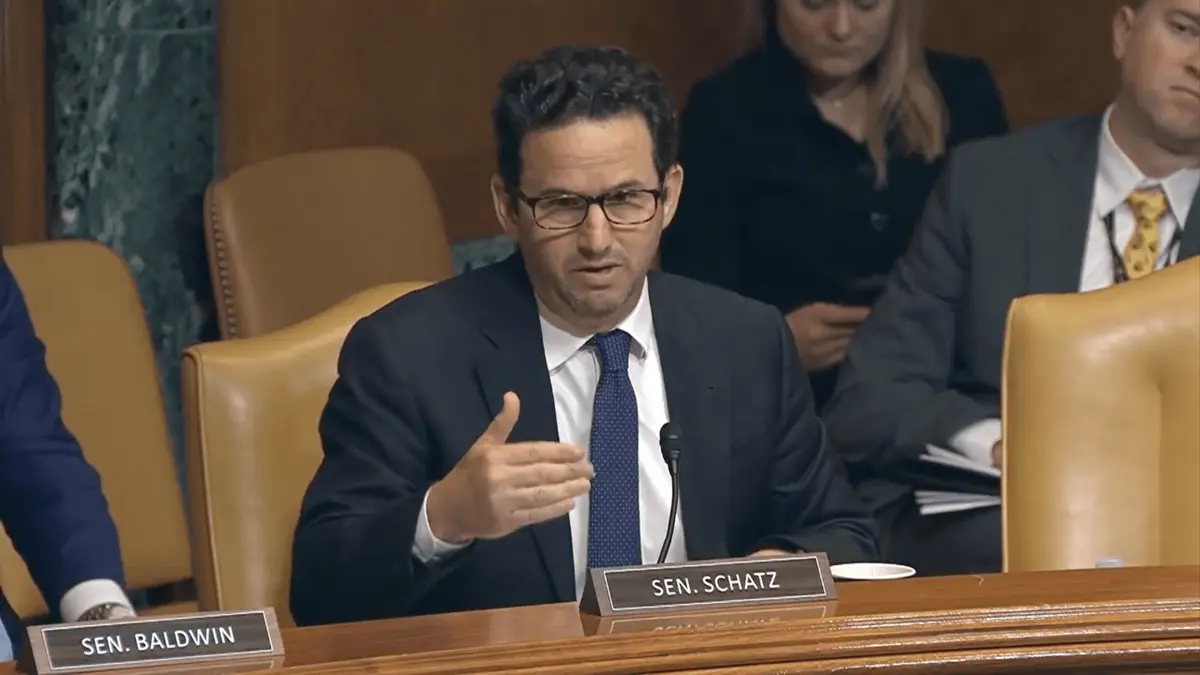
The six lawmakers who penned the letter pressed these identity verification organizations to furnish comprehensive explanations regarding their procedures for managing sensitive customer information and the measures they are implementing to defend against increasingly prevalent and destructive cyberattacks facilitated by artificial intelligence. Beyond the peril of fraud and identity theft, the lawmakers also noted that foreign adversaries are growing more capable of "infer[ring] Americans’ behavior through commercial data linked to government credentials," as stated in the letter, which bore the signatures of Sens. Brian Schatz (D-HI) and Marcia Blackburn (R-TN) alongside four other members from the Senate and House.
A spokesperson for IDScan did not provide an immediate reply when contacted regarding the matter.
In their correspondence, the legislators instructed the identity verification companies to mitigate risks by actively searching for system weaknesses, implementing a zero-trust architecture, and reducing dangers by limiting the collection, sharing, and storage of personally identifying data as much as feasible. The letter addressed to IDScan CEO Jimmy Roussel stated, "This breach’s scale warrants additional attention to the data-handling practices of companies like yours," detailing that in addition to the identification documents, nearly 600,000 medical cards, employment authorizations, and other sensitive materials were exposed. Furthermore, Krebs reported that many of those medical cards pertained to marijuana dispensaries.
The peddled license scans contained detailed imagery, including ultraviolet and infrared scans, which amplified apprehension regarding potential criminal utilization. The lawmakers also stressed that the personally identifiable information being offered on Nexus included scans belonging to high-ranking military and intelligence personnel.
The letter to Roussel concluded with the statements, “The consequences of this theft may be widespread and persistent,” and “Given the difficulty of tracking these credentials and data sales, remedying this breach will pose substantial challenges even where no further crime is committed.” Additionally, it warned, “Your duty to safeguard data is critical in light of AI-driven cyberattack capabilities, which may be utilized by cybercriminals for zero-day exploits.”
Independent technology journalist Brian Krebs, who initially brought the IDScan breach to public notice in September, shared on social media Tuesday that over the last couple of months, he has identified more than two dozen identity verification companies that retain scanned IDs, often by default. Krebs further explained that the entities verifying users’ identities frequently must pay extra fees to prevent the continued gathering of scans after verification is complete. Krebs also reported that cybercriminals operating on the Russia-affiliated dark web marketplace Nexus had begun extracting the data more than a year before officials discovered the stolen information online.
This legislative action reflects a broader industry concern regarding the operational security posture of third-party data handlers. The findings underscore the heightened scrutiny placed upon entities managing sensitive credentials in an era of advanced cyber threats.
Why it matters
This incident highlights significant security vulnerabilities within the identity verification infrastructure, which is critical for platform operations. Readers should watch how these directives translate into tangible security improvements against AI-enabled threats.