Granting the agent the developer's full credentials provides it with access to everything those credentials permit, posing a security risk should a secondary incident arise while the initial problem is being resolved.
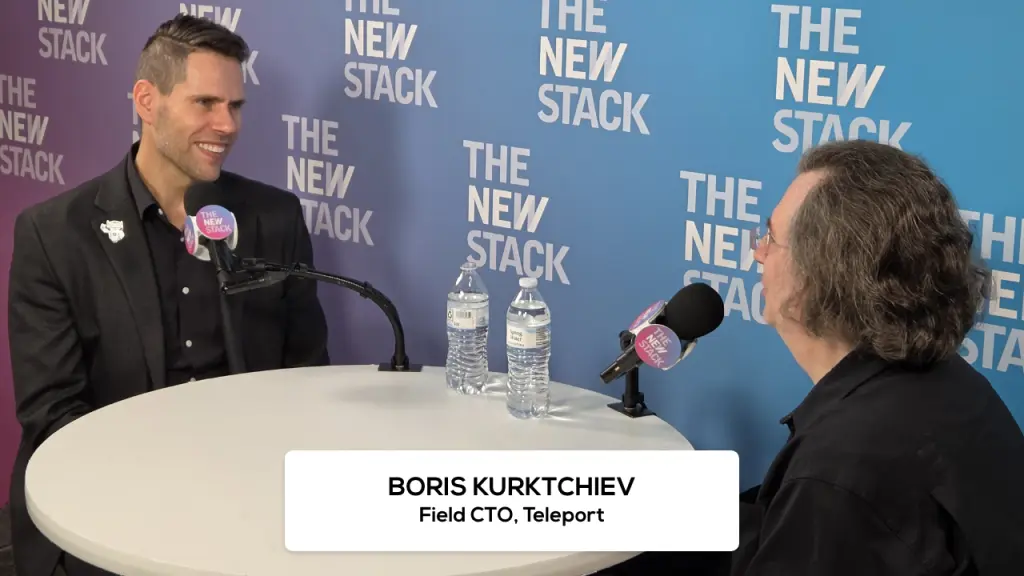
During a discussion with The New Stack’s Frederic Lardinois at KubeCon + CloudNativeCon in Salt Lake City, Teleport field CTO Boris Kurktchiev detailed delegated identity using this debugging scenario. The agent begins with no access and must request specific permissions for the task at hand. An audit trail subsequently connects the initiating individual to the agent's subsequent actions.
Kurktchiev explained that a developer can direct the agent to investigate without sharing their keys. He stated, "The agent had access on behalf of Boris." Teleport’s core platform is designed to offer teams a unified method for defining access across disparate systems that possess their own native controls.
For development personnel, this is significant when a single investigation spans from Kubernetes to a database, or when a CI/CD pipeline requires infrastructure access. Kurktchiev detailed applying this policy model to people, automated workloads, and agents, scoping permissions down to specific resources like a particular pod or database table.
The complexity increases when one developer initiates multiple agents concurrently. Each agent can generate access requests, and requiring a human to approve every routine step becomes impractical. Kurktchiev and Lardinois noted that the ease of disabling prompts changes when the work involves production environments.
Teleport revealed Beams at KubeCon, which Kurktchiev described as an agent runtime integrating sandboxing, identity, access, observability, and auditing. Isolation provides the agent with a designated operational space, yet teams must still assess the credentials available within that environment and their reach. Kurktchiev cautioned, "So just having a sandbox is not enough."
With Beams, Kurktchiev noted an agent starts without permissions. Teams can specify which resources the agent is allowed to request, the duration of that access, and what constitutes an acceptable execution path. "The default is always zero," Kurktchiev stated. This structure allows developers to differentiate between the agent's proposed plan and its actual granted permissions.
If the execution deviates from the planned path, Kurktchiev mentioned options to trigger alerts, halt the process, or fork the run to examine an alternative route. This last option is valuable because a deviation might uncover something worth pursuing.
These developments reflect a broader industry move toward granular control mechanisms for automated workloads interacting with critical infrastructure. Market participants are increasingly seeking ways to manage the operational risk associated with delegating complex, multi-system tasks to autonomous software agents.
Why it matters
For infrastructure operators, this addresses the critical security risk of granting broad credentials to autonomous AI agents during debugging. Implementing granular, zero-trust access models is essential for safely integrating AI into production workflows.