The assertion by President Donald Trump that American firms will be prevented from constructing data centers internationally is accompanied by the threat of imposing a "tremendous tax" on such overseas developments, a move framed by the President as necessary to maintain the United States' competitive edge in Artificial Intelligence against China.
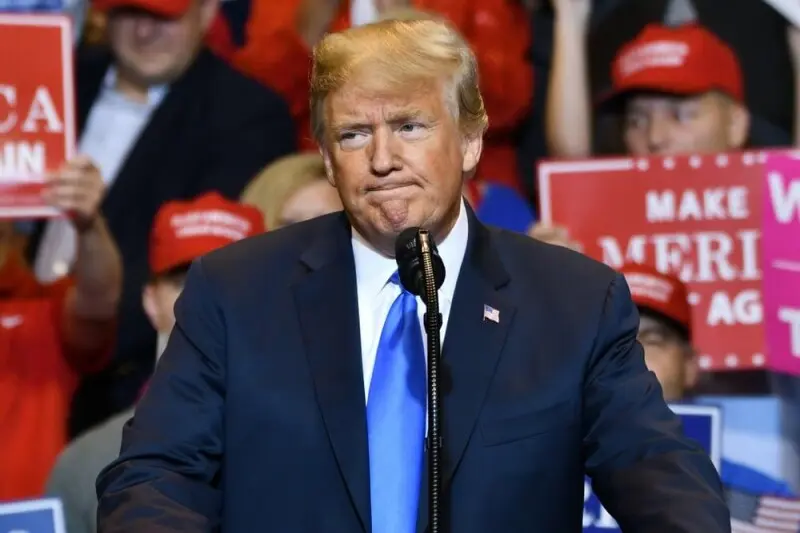
Following his return from the Asia-Pacific Economic Co-operation (APEC) summit held in Shenzhen, President Trump communicated his view during a White House press briefing, emphasizing that the nation's AI leadership represents a contest America cannot afford to lose. He stated that "we're not going to allow our companies to build datacenters outside of our country," adding that the allowance of such construction for other items, such as chips, had been "very destructive to our country." This pronouncement appeared to be unexpected, even to members of his own administration, as Trump remarked, "I haven't even said that to my people, but I'm telling them now." A video clip was disseminated by the Official White House Rapid Response account on X. When inquiries were made to the White House regarding the President's intent to enforce this, it remains to be seen if a response will be provided. The President further declared, "We're not going to allow companies to build datacenters in other countries. If they do that, they can, but we're going to put a tremendous tax on them. We want them to do it here."
These pronouncements occur while concerns persist that Chinese organizations have utilized Nvidia's advanced GPUs for AI model training by accessing cloud services situated in third nations. The US Commerce Department's Bureau of Industry and Security (BIS) recently enacted new regulations intended to curb this specific operational practice. Reiterating his stance, Trump asserted, "We're not allowing datacenters to go into other countries, as China will take all of them, and we're not allowing that to happen," and continued, "We're going to put tremendous penalties on companies that try and do it. They want to build that one in Finland, and we're not allowing that to happen."
The policy proposed faces significant legislative hurdles, as Congress, with both chambers under Democratic control when the new term commences in January, seems unlikely to permit such measures. Furthermore, established global operations by major entities like Amazon, Google, and Microsoft, which already encompass worldwide data center networks serving varied geographical areas, would be complicated by restrictions on further foreign construction.
Market participants have expressed skepticism regarding the practical efficacy of this threat. Roy Illsley, a chief analyst at Omdia, voiced doubts about the seriousness of the threat, noting that "There will be ways around that if he does impose some executive order," because "the ability to build datacenters is not just an American skill, many countries can build them, it is the equipment in them that is mostly US." Illsley concluded, "So I do not take this seriously as it would not work, there is no such thing as a US datacenter, they are made up of thousands of components from all over the globe. He could stop US capital from being invested in those countries, but that could have trade consequences."
From the perspective of European hosting firms, Mike Kharchenko of HostZealot explained that several valid justifications exist for cloud giants to maintain data centers outside the United States, citing issues like data latency and adherence to local regulations. He pointed out, "A buyer in Frankfurt won't wait for a page to load from Virginia. Some countries require certain data to stay inside their borders, and big European clients write it into contracts anyway."
The President also mentioned that communities within America hosting these data centers are generating substantial revenue, claiming that "they don't know what to do with it." These supposed financial advantages coincide with the provision of significant public subsidies, as a report from the nonprofit organization Good Jobs First earlier this year indicated that some states are incurring revenue losses amounting to billions due to the tax abatement programs designed to attract corporate establishment.
This discussion reflects a broader trend where technological infrastructure development is increasingly intertwined with geopolitical competition and domestic fiscal incentives. The involvement of entities like the US Commerce Department and the operational needs of global cloud providers highlights the tension between national strategic objectives and the decentralized, globally interconnected nature of modern digital platforms.
Why it matters
This proposed policy directly impacts the global infrastructure strategy of major cloud providers like Amazon, Google, and Microsoft. Restrictions on overseas construction would significantly complicate the existing global network architecture these companies rely on for latency and compliance.