The inherent danger lies in the fact that these familiar items, such as a job proposal, a notification regarding a service interruption, or a recognizable application, do not initially appear suspicious. Furthermore, a notable trend warrants observation: artificial intelligence is simplifying certain attack vectors.
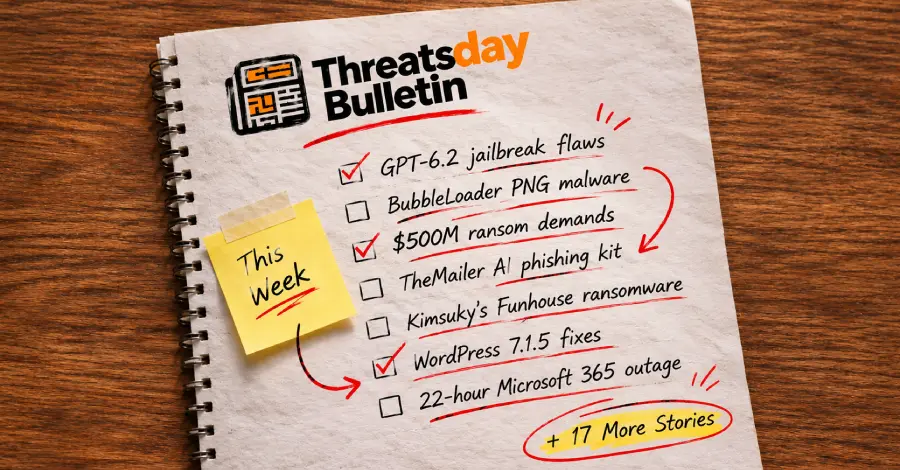
ThreatsDay has published several advisories, including details on GPT-6.2 jailbreak vulnerabilities, the BubbleLoader PNG malware, and instances involving ransom demands totaling $500M, alongside seventeen other related reports.
The utilization of expected stimuli to bypass security controls highlights a growing sophistication in threat actor methodologies. This pattern aligns with a broader industry movement where advanced technologies are being integrated into offensive security operations.
Why it matters
The increasing ease of social engineering attacks, amplified by AI capabilities, presents a growing operational risk. Infrastructure and platform security teams must adapt to these more subtle and familiar attack vectors. Watch for how these AI-assisted methods change the threat landscape for system operators.