It can execute code, access files, connect to services, and call external tools. That creates a new security question for enterprises: how do you give an agent enough freedom to be useful without giving it more access than it actually needs?
A model decision is not automatically an authorized action. That distinction becomes important the moment an agent can turn a model output into an action in a real system.
The answer can’t rely only on the model. Agent behavior can vary, while security controls need to be clear and enforceable.
That means putting controls around the environment where the agent runs, what it can access, which tools it can use, and what happens when a policy allows or blocks an action. For a CISO, this creates a trust gap.
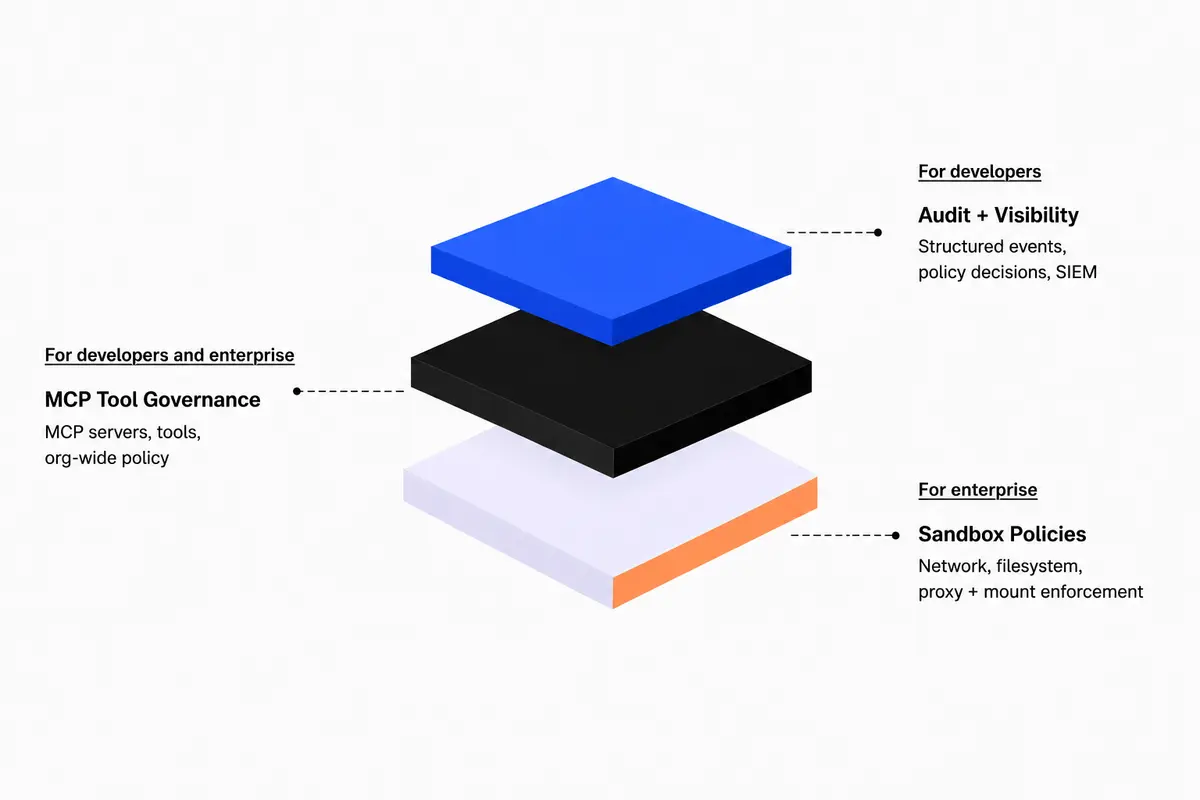
Approving the use of AI agents means being able to answer more than whether the model is capable: what access does the agent have, where are those boundaries enforced, and what evidence is available afterward? The goal is to let teams adopt agents without making model behavior itself the security boundary. Docker AI Governance approaches this through three areas: Sandbox Policies, MCP Tool Governance, and Audit + Visibility.