When another instance of an AI model is being prepared to handle incoming traffic, an eight-minute wait period represents a considerable delay. This wait feels even longer when user requests are already arriving. Although Kubernetes possesses the capability to schedule an additional replica, the process still involves provisioning the necessary hardware, retrieving a container image, loading the model parameters, and compiling the GPU code. Even after the autoscaler receives the instruction, the model is still undergoing its setup phase.
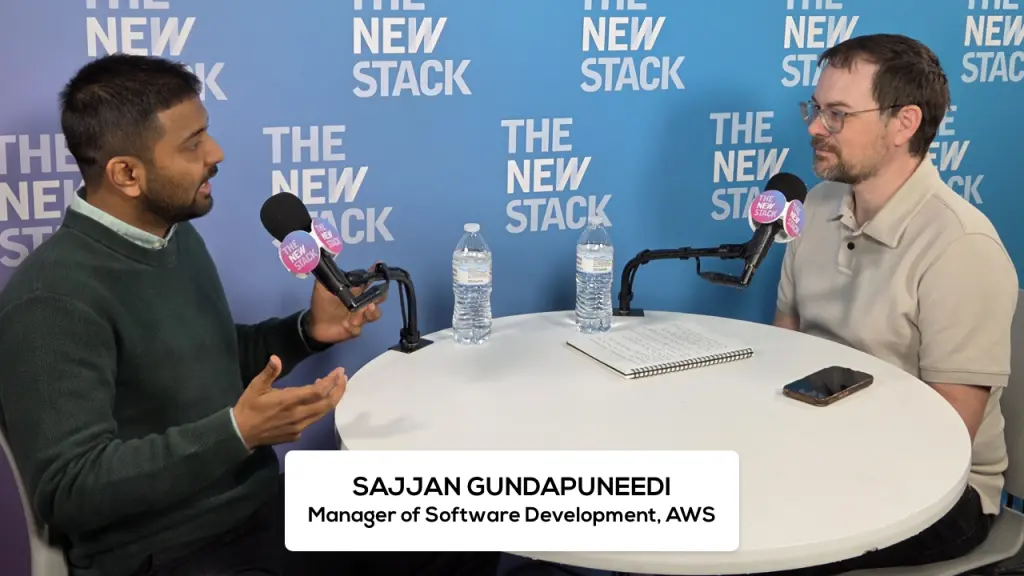
At KubeCon + CloudNativeCon in Salt Lake City this month, Matt Burns from The New Stack posed a question to Sajjan Gundapunnedi, a senior engineering manager for Amazon Elastic Kubernetes Service (EKS), regarding actions developers can take during these eight minutes. Their discussion initially addresses the difficulty in sourcing GPUs and progresses into the engineering choices that dictate the actual utilization of those GPUs. Gundapunnedi informed TNS that "Demand for GPU capacity or any accelerated capacity is outpacing supply everywhere."
In their interview, Gundapunnedi outlines two mechanisms within EKS for securing accelerated capacity: EKS Auto Mode and Karpenter, which functions as the Kubernetes node provisioner. On-Demand Capacity Reservations allow for securing capacity within a specific Availability Zone, contingent upon its availability. Furthermore, Capacity Blocks permit teams to reserve capacity for a predetermined future timeframe, offering those planning a training or fine-tuning run a method to schedule their tasks around such a reservation. Gundapunnedi conveyed to TNS that "What this lets you do is faster communication for your job."
Once the physical hardware is in place, the placement of devices becomes significant. EKS Auto Mode supports Dynamic Resource Allocation for NVIDIA GPUs and Elastic Fabric Adapters, enabling developers to specify the required devices for a workload and request both a GPU and an adapter on the same PCIe route. Again, Gundapunnedi stated to TNS, "What this lets you do is faster communication for your job." Training and fine-tuning jobs inherently involve repeated data exchanges, and time lost waiting for these exchanges can render GPUs inactive, even while billing continues. Allowing Kubernetes to factor in hardware topology when positioning a workload can help reduce this waiting period.
In the context of inference, a distinct scheduling challenge arises because traffic arrives in unpredictable bursts, necessitating that a new replica becomes functional while demand for it persists. Gundapunnedi detailed the approach his team implemented, starting with implementing capacity buffers within Karpenter so that replicas can land on pre-existing nodes during a traffic surge. He also described utilizing seekable OCI to pull and unpack container images concurrently, alongside employing vLLM with Run:ai Model Streamer to download model weights in parallel. For the smaller models used in the illustration, the compilation step proved especially resource-intensive, as every replica on a node was repeating the same computational effort. The team addressed this by caching the compiled artifacts on the node, allowing subsequent replicas to reuse them. Gundapunnedi highlighted the resulting efficiency, noting, "It was the cheapest configuration tuning for us, which gave the largest benefits." He reiterated this point, saying, "It was the cheapest configuration tuning for us, which gave the largest benefits."
The conversation also touched upon the degree of infrastructure ownership a team wishes to maintain. In Auto Mode, AWS assumes responsibility for managing worker-node images, associated bundled add-ons, and their upgrade lifecycle, while also operating the Karpenter controller. For teams requiring configurations not covered by Auto Mode, standalone Karpenter is presented as an alternative. This distinction is pertinent for an application developer as the operational focus shifts from merely deploying a model to sustaining the underlying infrastructure that enables its operation.
These operational intricacies reflect a broader industry trend where the complexity of deploying and managing accelerated computing resources demands deep integration between orchestration layers and underlying hardware capabilities.
Market participants and institutions are increasingly focused on refining the automation and resource management capabilities within platform services to mitigate the latency inherent in provisioning specialized compute assets.
Why it matters
For infrastructure operators managing AI workloads, the bottleneck often shifts from acquiring hardware to efficiently utilizing it. These EKS features directly address scheduling latency and hardware topology issues critical for high-throughput deployments. Understanding these provisioning and placement strategies is key to optimizing GPU utilization in cloud-native environments.