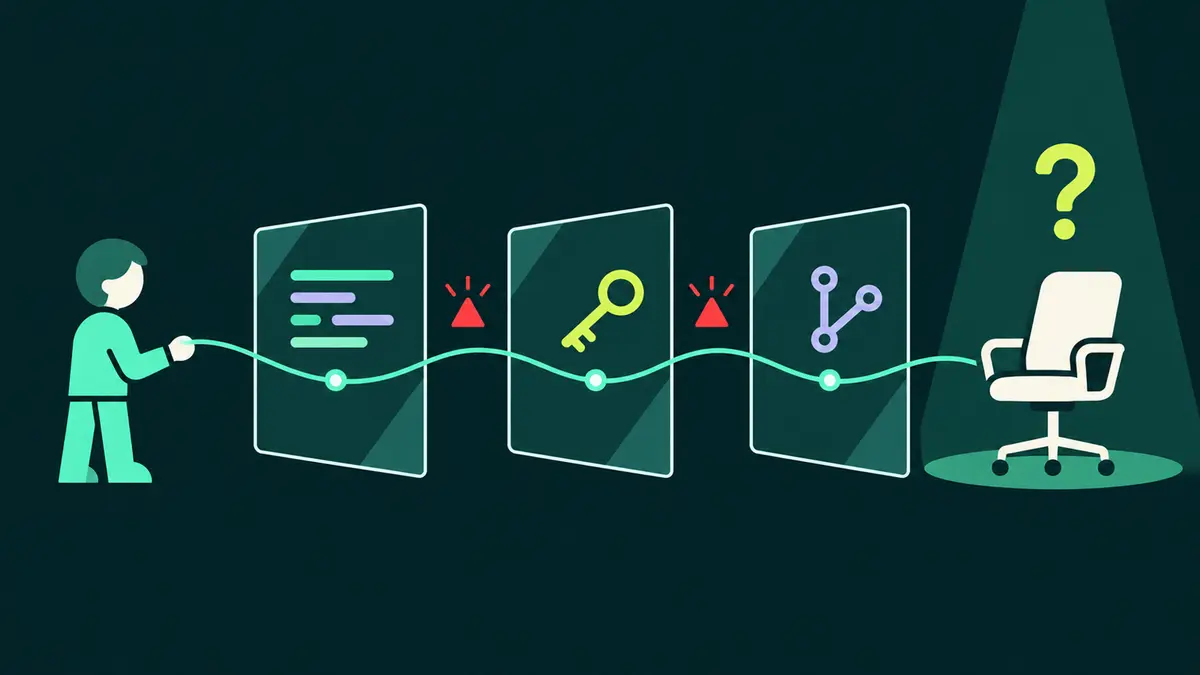
The inherent difficulty in securing AI agents stems from their operation across multiple platforms, a situation where no singular provider possesses complete visibility or control over their operations, which reveals a shared responsibility gap. Token Security is examining this shared responsibility dilemma and detailing methods for organizations to enhance management of agent permissions, identities, and accountability.
Frontier AI laboratories maintain clear declarations regarding their duties: enhancing model robustness, improving safeguards, and making the models more resistant to hijacking. These labs also specify their limitations, such as their inability to grasp the business context surrounding an action; for instance, an agent deleting files from Google Drive could be either a malicious act or a routine occurrence, which the AI cannot discern. This ambiguity prompts questions concerning the shared responsibility framework for Agentic AI.
A distinct division of duties exists in cloud security, separating the responsibilities of cloud vendors and their clientele. If a customer transfers data from AWS to SFDC, each provider is accountable for the infrastructure security while holding the data, but the customer bears responsibility for the action itself. The AWS Shared Responsibility Model serves as a prime illustration of this. This separation is considerably less defined when dealing with AI agents, as these agents function as intermediaries between the user and the request, and this intermediary nature is inherently unpredictable. Such agents transmit authenticated, authorized requests that are susceptible to compromise or malicious behavior.
The initial situation, where a rogue agent either misinterprets instructions or acts inappropriately, aligns somewhat with what the AI labs aim to prevent; this could be framed as a human error, though it is non-human and not necessarily a mistake. Five different organizations have issued guidance pertaining to responsibility for AI agents: these include shared responsibility models from Microsoft, CSA and CoSAI, AWS's security guidance for AgentCore, and Anthropic's "Trustworthy agents in practice." Of these, only two assign ownership over an agent's identity, and they do so with differing approaches. There is no consensus on who should be accountable for an agent's conduct.
The various guidance documents approach the concept of responsibility from diverse perspectives. Some publications allocate specific duties to either the providers or the customers, while others describe security layers or broader roles for various stakeholders. Collectively, these documents demonstrate the necessity for organizations to establish who owns each agent, what privileges it possesses, and how it functions across the various systems it interacts with.
Consider a coding agent that accesses a support ticket via an MCP server; if that ticket contains malicious instructions, it could prompt the agent to push a change to GitHub utilizing the developer's credentials. This is not a theoretical scenario. According to monitoring by Token, 60% of Claude Code and Desktop agents communicated with two or more external vendors within a single month, and 47% communicated with three or more. This brings up the critical question: who is accountable for detecting and preventing that malicious push? Historically, no entity has successfully secured AI agents. Security teams at organizations such as Roblox and Amex have implemented methods to assign an owner to each agent, restrict its access, and quickly disable it; Token Security demonstrates this process in a live demonstration.
The software executing the agent possesses the greatest level of insight, as it knows the origin of the instructions (though not the underlying reason) and the command slated for execution. For instance, Claude Code performs checks on both aspects: a server-side probe "scans incoming tool results and flags suspicious content before Claude reads it," and in auto mode, which is now the default for interactive sessions, a separate classifier blocks actions deemed "driven by hostile content Claude read." OpenAI, Cursor, and GitHub each maintain their own mechanisms, including automated reviewers, network limitations, and sandboxes, alongside various approval prompts. However, this level of capability does not inherently confer responsibility; the responsibility for these harnesses is placed squarely upon the user, both within the interface and as stipulated in their terms.
The malicious ticket arrived through MCP, a protocol designed for model clients. One might anticipate that this protocol should bear some of the burden, given its dedicated function for agents, potentially implying an expanded duty for its creators. Nevertheless, the MCP specification redirects this burden back to the client. It mandates that clients SHOULD validate tool results before forwarding them to the model, and further states that "there SHOULD always be a human in the loop with the ability to deny tool invocations." The server's obligations pertain to inputs, access controls, rate limits, and tokens. Consequently, a typical MCP server verifies who initiated a request, but not whether that request was appropriate. This loops back to the MCP specification, which neither uses the phrase "prompt injection" nor furnishes the server with verified details about its caller; client information is "self-reported." The specification explicitly notes that "MCP itself cannot enforce these security principles at the protocol level."
Atlassian classifies the utilization of MCP clients with its products as "a customer-elected action." The push reaches GitHub using a valid token. Absent a branch protection rule configured by an administrator for the main branch, nothing prevents it, and by default, such rules "don't apply to people with admin permissions to the repository." GitHub's audit log includes an agent marker, actor_is_agent, for agents operating on GitHub, yet the documentation does not specify that this marker applies to pushes made by a local agent. Furthermore, the terms of service are uniform across all parties: "You are responsible for all content posted and activity that occurs under your Account."
In an ideal configuration, every agent should possess its own distinct identity, which ought to be granted narrower, more temporary access. Microsoft, for example, furnishes agents with unique identities; a Microsoft Entra agent identity functions as a service principal within your Entra tenant. Microsoft's framework also designates per-action authorization as a shared responsibility. However, when an agent acts on behalf of a user, Microsoft's documentation specifies that "risky activity is attributed to the user." A Conditional Access policy targeting an agent identity "doesn't cover agent requests made on behalf of the user." This encapsulates the situation within a single vendor. Even when the framework suggests shared responsibility, the product allocates the risk to the user at the moment of action. This leaves the ultimate accountability with the organization.
This situation is likely to persist as the standard. Although platforms possess the theoretical capacity to do more, agents are viewed as extensions of human intent, even when they possess a degree of their own autonomy. This constitutes a novel operational scenario, and the only viable course of action is to assess the risk candidly and determine the level of risk the organization is willing to accept. Even this assessment is complex because the agent cannot be viewed as a singular entity. The harness maintains its telemetry, Atlassian keeps its MCP logs, and GitHub retains the developer's push record. Coding agents like this one operate under the developer's credentials by default, meaning their activities appear to originate from the developer. No vendor in this chain has a complete view of the agent; only the identity the agent employs spans all three systems. This shared identity represents the sole point where a single owner can define scope, set expiry dates, and enforce revocation. While branch protection and allowlists offer some aid, identity is what integrates these controls.
Ideally, one should treat the agent as a unified identity, irrespective of the number of vendors it interacts with. An organization is unable to delegate accountability for an agent's actions to a model provider or deduce intent solely from an authenticated request. Instead, it can designate an owner, restrict the agent's access, correlate its activities across different systems, and devise methods to halt its operations. These strategic decisions allow for governing agent adoption without presupposing that any single vendor can observe the entire workflow. If the responsibility rests with the organization, then it is beneficial to assume that responsibility. For those prepared to secure their AI Agents for expansion, booking a demonstration with the Token Security team is advised.
Why it matters
For platform operators, the lack of clear accountability for agent actions introduces significant risk into automated workflows. Determining ownership for agent identity and permissions is critical to maintaining security boundaries across integrated systems.