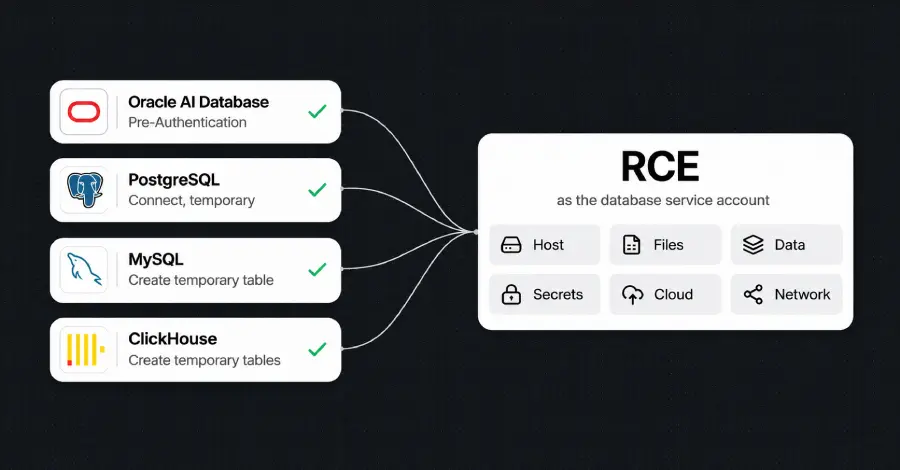
This capability was realized by targeting memory-corruption vulnerabilities residing within the engine code that processes standard SQL queries.
The proofs of concept, which were made public yesterday, encompass exploits for PostgreSQL, MySQL, and ClickHouse, in addition to a distinct exploit chain targeting Oracle that does not necessitate elevated privileges.
This finding indicates a significant security exposure within widely utilized database platforms, suggesting that access controls designed solely around data table permissions may be insufficient against underlying engine-level flaws. Market participants and institutions must now reassess the security posture of their database infrastructure given the potential for remote code execution stemming from seemingly benign, low-level database interactions.
Why it matters
This finding highlights critical vulnerabilities in widely used database platforms, posing a significant risk to infrastructure security. Operators must immediately assess their database configurations against these newly published proofs of concept. The potential for remote code execution from low-privilege accounts demands urgent patching and hardening efforts.